







There is a conversation happening in your body right now that most of your doctors have never mentioned.
Your gut is talking to your brain. Your brain is talking back. And somewhere in that exchange, your mood, your anxiety, your ability to think clearly and feel like yourself, those things are being shaped by what lives inside your digestive tract.
If you have ever noticed that your stomach tightens when you are anxious, or that you feel low and foggy after a stretch of poor eating, you have already felt this connection. You just may not have had a name for it.
Science does.
What Is the Gut-Brain Axis?
The gut and brain communicate through a bidirectional pathway researchers call the gut-brain axis. This network involves the enteric nervous system (the nerve network embedded in your gastrointestinal tract), the vagus nerve, immune signaling, hormones, and the trillions of microorganisms that make up your gut microbiome.
Your gut contains approximately 100 million nerve cells, more than the spinal cord. It produces around 95 percent of the body’s serotonin, which is the neurotransmitter most associated with mood regulation, emotional stability, and feelings of well-being. It also produces significant amounts of GABA, dopamine precursors, and other neurochemicals that directly affect how you feel.
This is not a metaphor. The gut is not just where food is processed. It is an endocrine organ, a neurological organ, and an immune organ, all operating in close communication with your brain.
And for women, this relationship is more layered than most people realize.
Why This Matters Differently for Women
Women are diagnosed with depression and anxiety disorders at roughly twice the rate of men, according to the National Institute of Mental Health. For decades, this disparity has been attributed primarily to hormonal fluctuations, life stressors, and socialization. Those are real factors. But emerging research suggests that gut microbiome composition may also play a significant role, and that women’s microbiomes respond differently to stress, hormonal shifts, and dietary changes than men’s.
Dr. Emeran Mayer, a gastroenterologist and neuroscientist at UCLA and author of The Mind-Gut Connection, has noted in his research that sex-based differences in the gut-brain axis are an understudied but consequential area. The gut microbiomes of men and women differ in composition, and estrogen appears to directly influence gut permeability, microbial diversity, and immune function.
What this means practically is this: the hormonal transitions that define a woman’s life, from her menstrual cycle to pregnancy to perimenopause, do not just affect her reproductive system. They affect her gut. And her gut affects her mind.
The Stress-Gut-Mood Cycle
For many women, the connection becomes most visible under stress.
Chronic stress elevates cortisol, which disrupts gut barrier integrity, reduces microbial diversity, and increases intestinal permeability, sometimes called “leaky gut.” When the gut lining is compromised, inflammatory compounds can move into the bloodstream, triggering systemic inflammation that has been increasingly linked to depression, anxiety, and cognitive impairment.
A 2019 study published in Nature Microbiology identified two specific bacteria, Coprococcus and Dialister, that were consistently depleted in individuals diagnosed with depression, even after controlling for antidepressant use. Participants with higher microbial diversity reported better quality of life and lower rates of depressive symptoms.
The cycle tends to compound itself. Stress disrupts the gut. A disrupted gut produces less serotonin and more inflammatory signaling. That inflammatory signaling contributes to low mood, anxiety, and brain fog. Low mood often leads to poor nutrition choices, disrupted sleep, and reduced physical activity, all of which further compromise the gut. And so it continues.
This is a cycle many women are living inside of without knowing it.
Hormones, the Microbiome, and the Estrobolome
There is a subset of gut bacteria called the estrobolome that specifically metabolizes and regulates circulating estrogen. When this bacterial community is in balance, estrogen is properly processed and eliminated. When it is disrupted, due to antibiotic use, a diet low in fiber and high in processed foods, chronic stress, or environmental exposures, estrogen metabolism becomes imbalanced.
This can contribute to estrogen dominance, which has been associated with PMS, endometriosis, fibroids, irregular cycles, and mood dysregulation. It can also contribute to low estrogen during perimenopause being experienced more severely.
In other words, supporting your gut microbiome is not separate from supporting your hormonal health. They are part of the same ecosystem.
Signs Your Gut-Brain Axis May Be Under Strain
Not all gut issues announce themselves with digestive complaints. Many women who struggle with gut-brain imbalance present primarily with:
- Persistent low mood or irritability that seems disconnected from circumstances
- Anxiety that spikes before or during the menstrual cycle
- Brain fog, difficulty concentrating, or memory concerns
- Fatigue that sleep does not fully resolve
- Food sensitivities that seem to be multiplying
- Bloating, constipation, or irregular bowel habits
- Skin changes such as acne or eczema that correlate with stress or dietary shifts
- Worsening PMS or perimenopausal symptoms
If several of these feel familiar, it is worth asking whether your gut may be a missing piece in how you are feeling.
What Actually Supports the Gut-Brain Connection
This is where the conversation becomes practical.
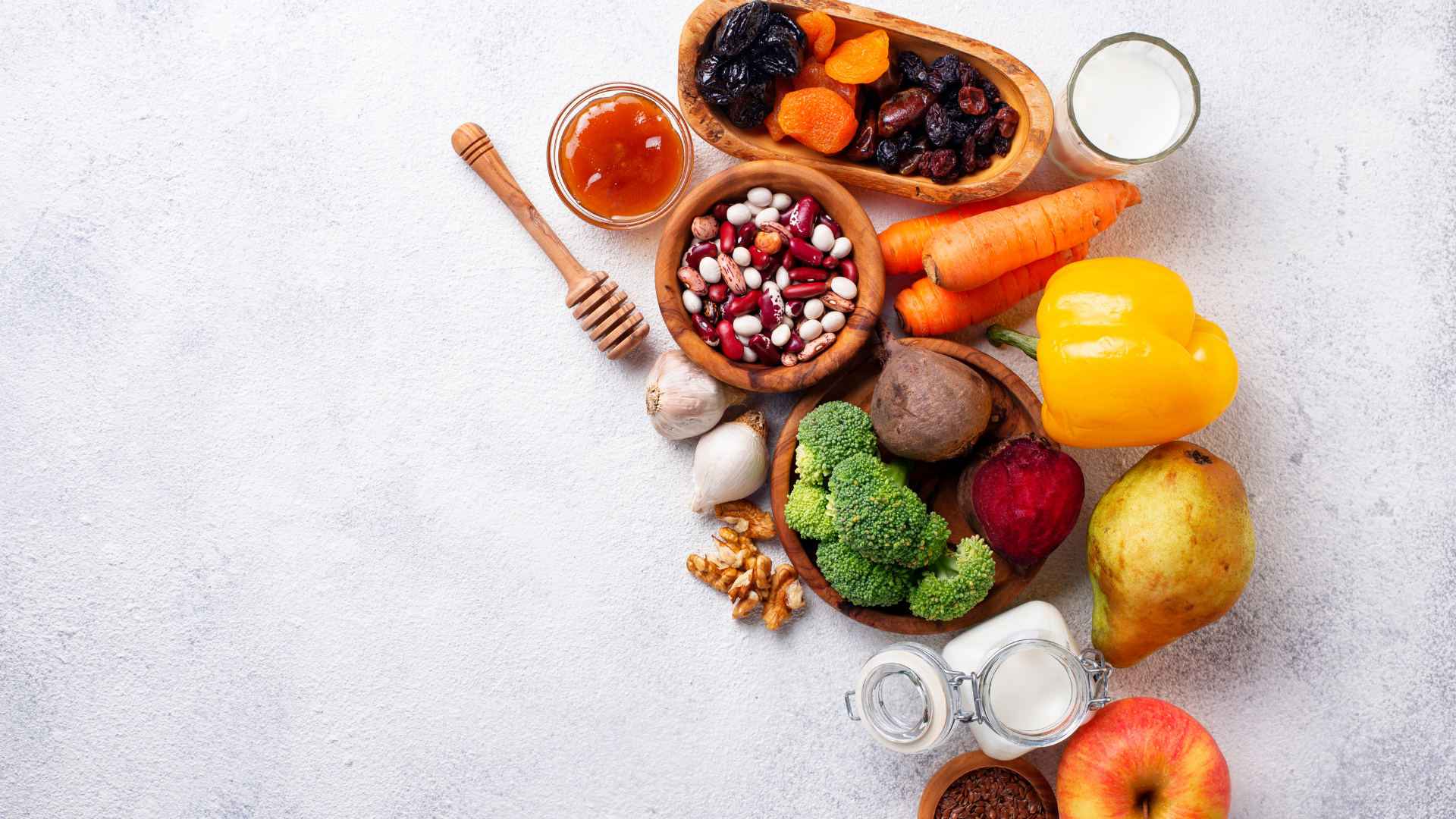
Dietary fiber and diversity. Research consistently shows that a diet rich in diverse plant foods is the strongest dietary predictor of microbiome diversity. Aim for a wide variety of vegetables, legumes, whole grains, and fruits rather than chasing a single “superfood.” Dr. Tim Spector, a gut microbiome researcher at King’s College London, recommends aiming for 30 different plant foods per week as a starting benchmark.
Fermented foods. A 2021 study from Stanford University published in Cell found that a diet high in fermented foods significantly increased microbiome diversity and decreased markers of inflammation in just ten weeks. Yogurt with live cultures, kefir, sauerkraut, kimchi, and kombucha are practical options for most women.
Stress reduction practices. Because the gut-brain axis is bidirectional, practices that calm the nervous system also benefit the gut. The vagus nerve, which runs from the brainstem to the abdomen, is a primary communication highway between the two. Practices that activate the vagus nerve, including deep diaphragmatic breathing, humming, cold water exposure to the face, and gentle movement, have been shown to reduce gut inflammation and improve gut motility. Meditation and prayer also reduce cortisol, which directly benefits gut integrity.
Sleep. Gut bacteria follow circadian rhythms. Disrupted or insufficient sleep alters the microbiome in measurable ways within days, shifting the community toward bacterial profiles associated with increased inflammation and mood disturbance. Protecting sleep is not a luxury. It is a physiological act of care for your entire gut-brain ecosystem.
Limiting unnecessary antibiotic exposure. Antibiotics are lifesaving when necessary. They are also profoundly disruptive to the microbiome. Being an informed advocate for your own healthcare, asking whether an antibiotic is truly indicated before accepting a prescription, is a reasonable and responsible position.
Probiotic and prebiotic support. Not all probiotic supplements are equal, and the research on which strains are most effective for mood support is still developing. Lactobacillus rhamnosus and Bifidobacterium longum have the strongest current evidence for mental health support, based on a 2015 review in Annals of General Psychiatry. Prebiotic foods, such as garlic, onions, leeks, asparagus, and bananas, feed beneficial bacteria already present in the gut.
A Whole-Person Perspective
There is something worth naming here that goes beyond the clinical data.
When the body is in distress, it speaks. Poor gut health, chronic stress, persistent low mood, these are not character flaws and they are not permanent conditions. They are signals from a body that was designed for wholeness and is asking for care.
The mind, body, and spirit are not separate systems. They are one interconnected whole. Caring for your gut is caring for your mental health. Caring for your mental health is caring for your spirit. And caring for your spirit, returning to rest, to stillness, to the Source of your peace, that care flows back into the body.
This is why a fragmented approach to wellness, treating the gut separately from the mood, the hormones separately from the stress, the spiritual life separately from the physical one, so often leaves women still unwell despite doing everything they were told.
You were designed to be well in every dimension. That design is still intact.
One Next Step
If this resonates and you are wondering where to begin, start with one thing. Not ten things. One.
Add a fermented food to your meals three times this week. Notice how you feel at the end of seven days. Not just in your stomach, but in your mood, your energy, your clarity.
The body responds to small acts of intentional care more quickly than most women expect. You do not have to overhaul everything. You have to begin somewhere.

+ show Comments
- Hide Comments
add a comment